
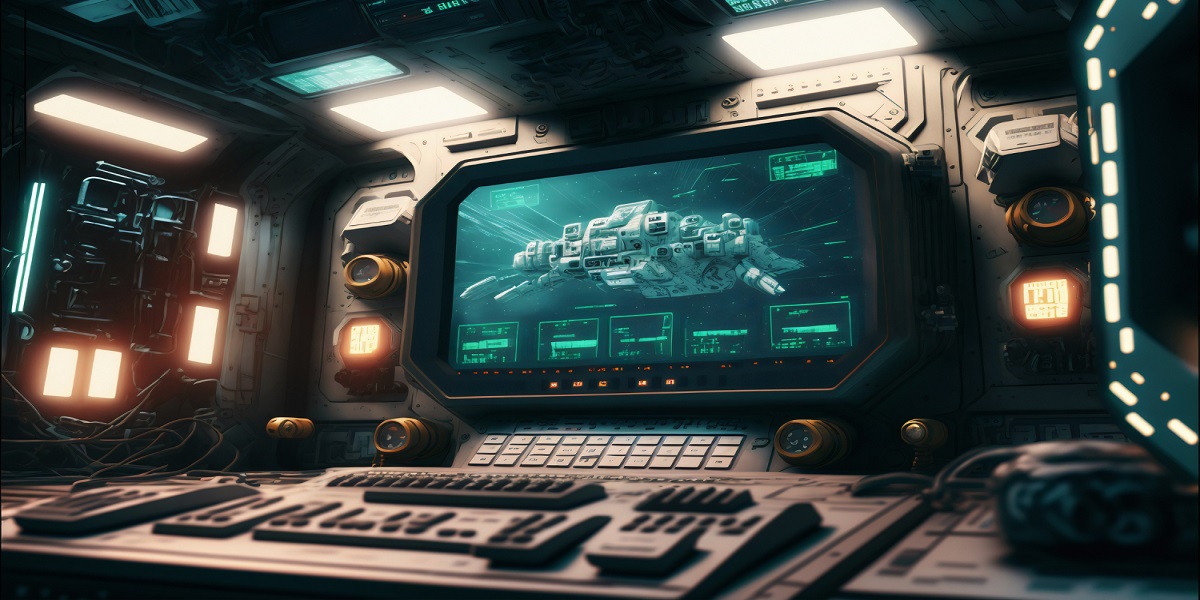
How NASA Uses Web Design to Optimize User Experience in Space Control
- By Jennifer Garner
- 03-05-2024
- Web Design
The edge of miscalculation in the essential operation of spacecraft, from technology to the exactitude of the mission control system, is slender. NASA, the spearhead agency in spacecraft crafting, has long recognized the importance of user experience in mission control and the role of web design in successful space missions.
The teams of masterminds and researchers govern and monitor spacecraft, inspect data, and quickly resolve problems on the ground zero of space missions. Amid entanglement, organized communication and determination are sanctioned in this vigorous environment. The old in-house build technologies used in NASA stand the need for a user-friendly frontier, recognized in time and being worked on for usability and accessibility in mission control by the web design revolution.
Complexity of Space Control
Space control is an intense environment with vast amounts of quick statistics spurting in. It involves observing the excellent shape of spacecraft, the security of astronauts, and the favorable outcome of underground experiments. Expert Mission control centers of NASA have skilled crews relying on the comprehensive, intelligent, and user-friendly frontier to forge critical verdicts. Let's have a peek at the complex space control:
-
Multitudinous Mission
Mission control knocks multiple operations concurrently, which need distinctive information concoction and control forefronts.
-
Concurrent Data Overload
Spacecraft provide colossal data in real-time, from the engine's presentation to the squad's health.
-
Pertinent Decisions
Mission control requires a quick inspection to fabricate verdicts leading to life-and-death outcomes.
Importance of UX in Space Exploration
Space exploration can improve the usability and efficiency of interfaces in spacesuits, habitats, and control rooms by emphasizing User Experience (UX). As a result, astronauts make fewer mistakes and experience less stress, which improves decision-making and eventually raises mission success rates.
Key Features of Web Designing in Space Control
Web design has the following key features in mission control:
-
Responsive Design
Mission control teams use various devices in different operations, from desktop computers to smartphones and tablets. The need to ensure user experience across multiple devices is paramount. NASA prioritizes responsive web design principles that allow its engineers to monitor a mission, even from their office monitor to their laptops or tablets on the go. The feature provided by Custom Website design is accessed by mission-critical data while maintaining convenience and usability.
-
Smooth Information Building
The space mission is bound to generate enormous amounts of data during its operations, which is quite burdensome. NASA makes rapid access and comprehension possible by arranging complex data sets using information architecture principles. The efficient location of the most pertinent information by mission control operation is made possible amongst a vast sea of information by sorting data hierarchically and playing distinct navigation routes.
-
Accessibility and Comprehension
Accessibility is not just a convention in the mission control domain but a pre-requisite beyond any question. NASA prioritizes accessibility standards to make them suitable for use by the incapacitated. Embracing features like screen reader empathy, color distinction adaptation, and command shortcuts, NASA guarantees the effective participation of all team members in all space-related projects despite any impairment.
-
Optimized Data Explication through Visualization
Complex information can be fetched swiftly and effectively through graphical representation. NASA optimizes sophisticated data by utilizing visualization techniques to modify raw information into communal tables, guides, figures, and 3D representations. This feature aids mission control with intuition to space control performance, route effectiveness, and ecological state, empowering quick decision-making.
-
Real-Time Alliance Aid
Concrete decision-making in mission control relies on effective communication. NASA fused real-time partnership gadgets with the web-based mission control frontier, which mandated that their team members share information, trade communication, and seamlessly associate their actual locations. Mission control operations can cooperate in real-time, boosting operational coherence despite being at NASA's headquarters or working from different parts of the world.
-
Customer-focused Design Repetition
NASA continuously congregates responses from mission control functions and comprises user intuition in specific design iterations. In addition, NASA fosters a user-centric approach that constantly enhances and revolutionizes space control operations. The mission control border also aligns with users' functional needs and preferences, relying on them daily by requesting feed from end users throughout the design operation.
Web Designs: Optimizing User Experience in Space Control
Web design acts as a viaduct between the multiplex world of space intelligence and human potency. Here's a brief look at how web design plays a significant role in optimizing user experience in space control:
-
Data Planning
Web design California companies excel at creating interfaces that facilitate quick decision-making. By arranging complex information clearly and logically, they reduce users' cognitive load. This is achieved through techniques like color coding, intelligible text hierarchy, and familiar layouts, preventing users from feeling overwhelmed by information overload.
-
Personalized Interfaces
Web designers allow dynamically customized mission control interfaces depending on the specific needs of each mission. This empowers and emphasizes pertinent data during different junctions, from instigation to re-entry.
-
Data Visualization
Critical data is arranged in graphs, charts, and status indicators to make it optically enticing and comprehensible. This disposition by UX Design California allows for speedy recognition of trends and peculiarities, averting reproving issues.
-
Congenital Controls
The buttons designed on the control panel have systemized icons, explicit labels, and tactile feedback to ensure that the most complex operation can be performed with precision.
-
Moderation for Focus
Mission control cannot tolerate even minor diversions. Web designers prioritize working on critical factors to create a tidy environment by modest aesthetics, drawing out redundant factors to best focus.
-
Current Problems in Space Technology
Space technology is currently facing multifaceted challenges ranging from technical obstacles to environmental distress, for example:
Space Scrap Administration
Space debris and potential collisions have become significant concerns with the large number of launched satellites and spacecraft and the growing popularity of weak Earth orbit for substantial satellite assemblage. This debris poses severe hazards and spacecraft damage for both present and future space operations.
Viability of Reusable Rockets
Developing reusable rockets is cost-effective and revolutionary but poses serious sustainability challenges. This project is challenging for space engineers, requiring numerous embarkations and re-entries. Long-term sustainability in space missions involves the assurance of efficient renovation and relaunching.
Technical and Security Provocations in Human Spaceflight:
With the increased feasibility of space tourism, the well-being and safety of astronauts are of prime importance. Space tourism needs radiance shielding, life support administration, and crisis control. The human spaceflight is working at the commercial level, but it must meet righteous safety standards.
Accessibility and Cost Management
Despite extension and advancement, high-cost space technology is a roadblock for small countries and companies. The critical challenge is to make space technology comprehensible and reasonable so that a wide range of participants can participate in space research and exertion.
Communication and Data Transfer
Well-ground communication and transmission across distant planets and deep seas is a complex challenge in spacecraft. This requires the development of advanced technologies that can resist grating space conditions and attest to high-speed transmission over enormous distances.
Environmental Knock
Spacecraft have disastrous environmental effects, such as carbon emissions and destruction of ecology. To deal with these long-term aftereffects, the space industry should monitor its footprint on Earth and space with frequent space launches.
Challenges, ingenious engineering, righteous safety assurance, international coordination, and sustained practices must be addressed to unlock space exploration's full potential.
UX Solutions for Space Technology Challenges
User Experience principles with tactical and user-centric approaches can be utilized to solve crises in space technology.
Complex Interface Clarification
The fundamentals of space technology are complex, and supervising these convulsions is pivotal for successful functioning. user experience simplifies the user interface by managing complicated data in comprehensive and understandable patterns like optical hierarchy, explicit labeling, and friendly control.
Typically, the control panels of Satellites and Space crafts in Website Development California are designed with the principles of easy use, lower cognitive load, and probability of operative oversight. This approach can be justified by using up-to-date user experience in mission control.
Building Up Accessibility in Commercial Spacer Drift
User experience can bridge the cracks essential in making technology approachable to a broad public, as space is more mercenary with ventures like space exploration and satellite internet aid. It fulfills the demands of designing a reciprocal ordeal for user-friendly frontier and space tourism for governing satellite-based internet assistance.
Encouraging Sustainable Operations by UX
The sustainability concerns work besides growing space technology. User experience aids the design process by impregnating sustainability practices. This demands generating features in the interface that allow users to share their feedback on the environmental outcomes and gadgets that assist in the design of reusable or recyclable sections. Environment-friendly operations in space technology are spurred by the implementation of sustainable values by Web design agency California, which optimizes the user experience.
Promote Coordination with Adaptive UX Design
Space technology development requires collaboration with diverse groups, such as scientists, engineers, and end-users. The accommodative, resilient user experience design smooths these collaborations. user experience augments the competence and effectiveness of collaborative space technology by providing platforms that permit easy data allocation, collaborative gadgets for remote teams, and a frontier that can be personalized to suit different user roles.
California web design Services designers apply user experience to optimize the usability and accessibility of complex systems, driving innovation and sustainability in this swiftly evolving field.
Case Study
The Next Generation Mission Control System
With rationalized mission control operations, NASA has developed a cutting-edge platform, the Next Generation Mission Control System (NextGen MCS), which leverages user-centric design principles. Due to pioneering technologies with the latest data analytical potential, it provides mission control operations with unrivaled perception and command over space missions.
Essential Features of NextGen MCS:
Automatic Dashboard Interface
NextGen MCS offers innovative features like personalized dashboard frontier. This permits users to design their custom-built workspace based on their distinct rules and inclinations. Users are free to arrange their dashboard display according to their requirements, from quick telemetry data to mission status upgrades.
Anticipated Analysis
NextGen MCS inspects historical mission data using a machine learning algorithm to anticipate possible risks and anomalies beforehand. This approach not only assists in taking primitive measures to alleviate potential risks but also certifies security and favorable results in space missions.
Incorporating Augmented Reality
The integration of augmented reality in space control missions optimizes the visualization experience. NextGen MCS optimizes situational perception and smooths the path for an informed verdict by imbricating telemetry data on the corporeal model of spacecraft and the planetary domain.
Communal Workspace
Mission control operations need real-time collaboration to allocate insight and arrange response efforts. NextGen MCS makes this collaboration seamless within the unified domain, whether troubleshooting anomalies or corrective maneuver trajectories.
Final Lesson from the Above Discussion
NASA offers revolutionary insight into web design principles beyond the Space Agency. These lessons are interpretations of the above discussion:
User-First Outline
Always organize the demands of users and certify the frontier details with specific objectives and missions.
Evaluating Testing is Critical
Identify and address possible usability risks early by involving real users in the design process.
Data Visualization is Essential
The immediate comprehension of complex and critical data is made possible by modifying it into comprehensive and visually appealing formats.
Conclusion
The strategic use of web design to optimize user experience in space control exhibits NASA's unwavering commitment to excellence in space control operations. The responsive layouts, intuitive navigation, and visually engaging web designs of NASA have revolutionized the access, analysis, and utilization of information in complex space realms that empower space engineers and scientists to satisfy the human quest for knowledge beyond the boundaries of our planet. In the continually evolving space exploration, NASA fosters accessibility and inclusivity through web design best practices championed by web design California talent. This approach breaks down barriers, making NASA's digital resources available to a broader audience.
FAQs
1. What technology does NASA use in space exploration?
NASA uses a robotic system to explore other planets and objects in our solar system.
2. What is NASA's role in space technology?
NASA inspires the world by exploring fresh interfaces, discovering new knowledge, and developing new technology.
3. How does access control protect NASA users?
Access control permits or denies access to a computer system, system information, and system location based on assigned duties assigned by the user.
Author

Jennifer Garner
This blog is published by Jennifer Garner.
Recent blog
.jpg)
Role of DEX Development in Decentralized Finance
Technology | 24-09-2026.jpg)
How to Evaluate Outsourced Link Building Without SEO Risk
SEO | 23-09-2026.jpg)
Optimize Salesforce Data Before Deploying AI Agents
Salesforce | 22-09-2026