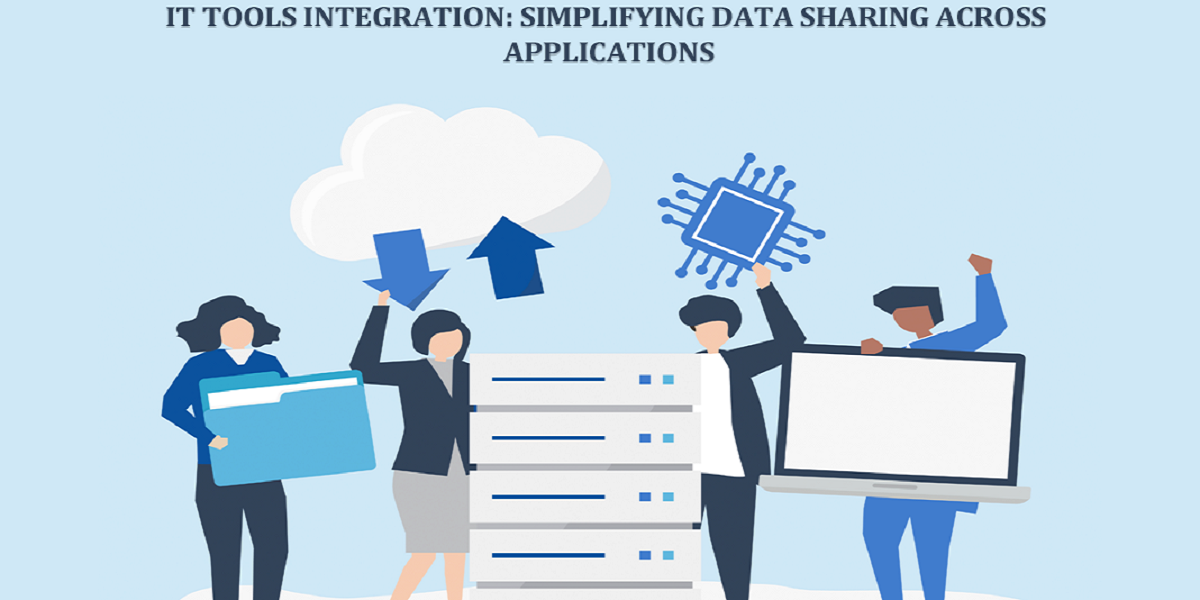
IT Tools Integration: Simplifying Data Sharing Across Applications
- By Motif Creatives
- 01-07-2025
- Technology
Are your apps truly synchronizing? Have you ever wished that your work did not feel so tedious simply because your apps do not “talk” to one another?
Perhaps you copy and paste customer information from your webpage into your emailing tool, or you download reports from software to upload them onto another system. All of this not only exacerbates errors but also adds immeasurable time, stress, and hassle.
When businesses begin to scale and adopt more digital tools, they encounter this problem quite frequently. Most applications operate in silos fairly well, but they do not seamlessly exchange information.
This is the precise moment when integration of IT tools becomes essential. It stitches different software together so that they function as one unified whole. This translates to less manual work, faster completion times, and improved service precision.
This article explains how integration functions, its significance, what obstacles may surface, and the strategies for successfully implementing it within any business. Whether you are a small-scale e-commerce shop or a large enterprise, integration can assist intelligent expansion.
What is IT Tools Integration?
Integrating IT Tools involves linking software systems to automate data processing within a system. Integration helps eliminate repetitive tasks and the need to switch between different applications manually.
As a store manager, you can automate the following processes upon customer interaction:
- Confirmation emails can be sent using your email platform.
- The new customer record can be created in your CRM.
- Inventory and shipping procedures can be alerted.
- Accounting software can also be updated and notified.
All the activities above would have to be done sequentially without integration.
Various other types of integrations include:
- Full API integration allows individual tools or programs to communicate with each other according to a set industry standard.
- Applications that lack a universal language can be connected using Middleware Software.
- Certain tools like Slack and Salesforce offer built-in integrations that allow interconnection with other services.
- No-code tools such as Zapier or Make enable that lacking technical expertise to connect applications with ease.
Integration is designed to enhance the speed, intelligence, and functionality of the integrated tools.
Why Integration is Important for Modern Businesses
Businesses communicate with their clients using a myriad of tools, including email, customer support, marketing, and finances. In the absence of integration, every application works like a separate island, which causes delays, misunderstandings, and negative customer impressions within the business.
Integration is vital because it does the following:
Increases efficiency: Saves time as employees no longer have to switch between tools or repeat work.
Supports Business growth: Simplifies the process of adding new tools and is useful when expanding the business.
Achieve Business goals faster: Integration allows businesses to complete tasks in seconds rather than spending hours, increasing overall speed.
Treat integration as a critical system that serves the purpose of building a highway connecting the tools while allowing data to be transferred without obstacles. This allows employees to focus on the primary goal of the business, which is to grow and serve the clients.
Common Areas that Benefit from Integration
There is no single part of a business that does not benefit from integration. Let us examine the important ones:
a. Sales and Marketing
Marketing gets smarter when CRMs, emails, and advertising tools get integrated. You can track lead origination, their activities, and the responses they give to different campaigns. Your targeted messages can be much more focused, which increases sales.
b. E-commerce
Integration can prove very advantageous for online sellers. You can now integrate your storefront with the payment gateway, stock management, and shipping vendor. For example, a WooCommerce pre-order plugin can send stock notifications directly to your team and automatically update customer information when the stock is updated.
c. Human Resources
HR departments have separate applications for recruiting, payroll, staff training, and performance evaluation. Due to integration, it is much easier to retrieve empirical data stored in different systems, as there is less manual work and improved precision.
d. Customer Support
When ticketing systems, CRMs, and chat programs are integrated, support personnel can perform much better. They can access all customer records and respond much more appropriately.
e. Finance and Accounting
The ERP components and billing tools create invoicing, which provides immediate information on the company’s finances. This ensures timely payments and current accounting.
With smart integration, each department becomes more efficient and more connected.
Benefits of IT Tools Integration
Collaboration has a variety of benefits, as tools integrate and work together.
Real-Time Data Access
With integration, no data is outdated. When customers change their addresses on one app, all linked tools show the updated address in real-time.
Better Collaboration
Now, teams can send files, messages, and updates to each other without restriction. There is no need to worry about having to sift through many emails with outdated documents and files.
Improved Customer Experience
Customers appreciate not having to repeat their information ad nauseam. Thanks to non-siloed systems, all pertinent information, such as customer history, orders, and previous issues, is readily available for fast customer support.
Greater Flexibility
Every task is unique and can be done with the best possible tools. You are not restricted to one software suite, allowing each application to integrate with the next.
Smarter Business Decisions
Providing all available data from various tools on one report or dashboard simplifies analysis and consequently facilitates informed decisions.
Business effectiveness, speed, and innovative techniques are the results.
Integration Methods: Choosing the Right Approach
Every business has different integration needs. Below are the most commonly used ones:
API Integration
APIs allow communication between two apps. Developers use these to create tailored interfaces. They are dynamic and powerful but, in most cases, require programming.
Middleware
Middleware is an interpreter that relays information between different apps. It is essential when applications do not have direct connections but exchange data.
Native Integrations
Some applications have pre-built integrations that can be helpful out of the box. For example, Zoom seamlessly integrates with Google Calendar. Such solutions are simple to implement but often do not provide comprehensive solutions.
No-Code Tools
Programs such as Zapier or Make and other zapier alternatives allow you to create actions based on triggers and events. A typical example would be a phrase such as: If someone fills out a form, then an email is sent, and the user’s details are entered into a spreadsheet.
As noted, each type serves a different purpose depending on one’s integration goals, technical know-how, and financial resources.
Challenges in IT Tools Integration
Integration comes with its own unique sets of advantages; however, it is not always straightforward. Some of the common obstacles are listed and explained below:
Compatibility
Every tool is unique, and some tools might not offer configurations with others. Older software may lack documentation or may not support APIs.
Security Risks
Providing access to data carries a higher risk of data leaks or unauthorized attacks. To mitigate these risks, use secure access channels with proper access control settings.
Cost
Some customizations or third-party infrastructure to facilitate integration can be particularly expensive for smaller firms.
Complexity
Attempting to interlink numerous systems together at once can be extremely counterproductive, as it requires more effort to maintain each added interface.
Maintenance
Real-time updates made in one application have the potential to disable all other connected applications virtually. Systems need constant oversight to ensure smooth functioning.
Strategic planning and the right tools can help mitigate these difficulties.
Best Practices for Successful Integration
Following these suggested guidelines will increase the efficacy of the integration process.
a. Know Your Goals
Setting well-defined goals is critical to the success of integration. Do you expect quicker support or more in-depth reporting? Unambiguous goals streamline your decision-making regarding tools.
b. Choose Tools That Work Together
REST APIs are essential, and supporting documentation must be checked prior to purchasing the application. Ensure that integration-capable apps are selected.
c. Start Small
Start with one or two tools, evaluate the outcome, and then expand.
d. Use Secure Protocols
Always use encryption for HTTPS, API keys, and Known Authorized Access. Safeguard customer information at every phase.
e. Monitor Performance
Track integration activities with logs and dashboards. Use alerts for system failures.
f. Train Your Team
Train them on the functions of the system so that there are no mistakes and boost trust.
You need planning and testing so that you can integrate successfully together.
Popular Tools That Help with Integration
Even people lacking expertise can use these platforms because they do the simplest form of automation and integration:
Zapier
It is best known for its usage in numerous applications. It is suitable for many tasks, including alerting through email and seamlessly transferring information.
Make (formerly Integromat)
It has advanced simplified modules like filters, routers, and error detectors, which offer advanced handling of more detailed tasks.
Microsoft Power Automate
Best suited for users of Microsoft applications like Excel, Outlook, and Teams.
Tray.io
A robust solution for businesses needing more control and custom flows.
IFTTT
Perfect for automation of small tasks. e.g., setting reminders in the calendar and posting on social media.
These will allow you to integrate the system without the added costs of developers.
Real-World Example: A Small Retail Business
Imagine a small business that deals with a range of handcrafted items that are available for sale online. It owns:
- An online store powered by WooCommerce.
- An account with Mailchimp for promotional purposes.
- Google Sheets to track stock.
- QuickBooks for bookkeeping.
Consider the case without integration; the owner would have to:
- Manually copy orders from WooCommerce and enter them into QuickBooks
- Copy and paste emails to Mailchimp – opting to streamline subscriber addition occurs at a later stage.
- Manually monotonously change the stock at the end of each day.
With these tools integrated, the owner does not have to:
- Feeding all orders directly into QuickBooks.
- Manually input all new customers into Mailchimp; they are now done automatically.
- Stock reflects a change in real-time on the website.
Effortlessly streamline processes or servicing customers and reduce stress. Redirecting focus toward business expansion rather than sweating the minutiae aids in efficiently growing the business.
Integration in Mobile Apps
Mobile apps are now a big part of business operations. Many people use their phones to check emails, track sales, or manage inventory. That’s why it’s important to integrate mobile apps with other tools.
For example:
- Your WooCommerce pre order system can send notifications directly to your phone through a mobile app.
- A sales app can sync with your CRM so customer data stays updated on the go.
- Project management apps like Trello or Asana can connect with Google Drive or Slack for real-time teamwork.
Mobile integration lets you work from anywhere. It’s fast, flexible, and keeps your business running smoothly—even when you’re not at your desk.
Customer Data Integration for Personalization
When customer data is spread across tools like email, sales, support, and social media, it’s hard to see the full picture. Integration brings all that data together, helping you understand your customers better.
For example:
- When your email platform and store are connected, you can send offers based on past purchases.
- If your support tool is linked to your CRM, agents can give faster, more personal replies.
- Data from a WooCommerce pre order can be used to recommend similar products or offer early access to loyal buyers.
This kind of personalization builds trust, improves customer satisfaction, and increases repeat sales. Integrated data is the secret to creating smart, targeted experiences that customers love.
Future of IT Integration
In the future, industries will structurally shift toward AI-driven integration systems. The features are:
- Workflows with advanced AI can offer suggestions for the best actions.
- Data sharing tasks can be triggered by speaking – voice commands.
- Integration will use single dashboards as the hub for all tools.
- Synchronization will happen quicker on the new, faster cloud networks.
In the near future, applications will not just connect tools; they’ll be transformed into advanced systems that make decisions without human intervention. Integration, instead of being an option, will seamlessly steer around and become infrastructure.
Conclusion
In a world where every second counts, having disconnected tools slows you down. Integrated IT systems transform disjointed applications into sophisticated interconnected systems. It allows data sharing with ease, automates monotonous processes, and increases efficiency within your team.
From sophisticated CRMs to basic e-commerce add-ons like WooCommerce Pre Order, integration enables everything to function seamlessly. Integration makes better business processes, enhanced customer interactions, improved customer service, higher data accuracy, and increased ability to support growth objectives possible.
The future is going to be interconnected systems. If your applications are still operating independently, it is high time to connect them because more innovative systems result in more successful businesses and a competitive edge.
Author

Motif Creatives
This blog is published by Motif Creatives.
Recent blog
.jpg)
Role of DEX Development in Decentralized Finance
Technology | 24-09-2026.jpg)
How to Evaluate Outsourced Link Building Without SEO Risk
SEO | 23-09-2026.jpg)
Optimize Salesforce Data Before Deploying AI Agents
Salesforce | 22-09-2026