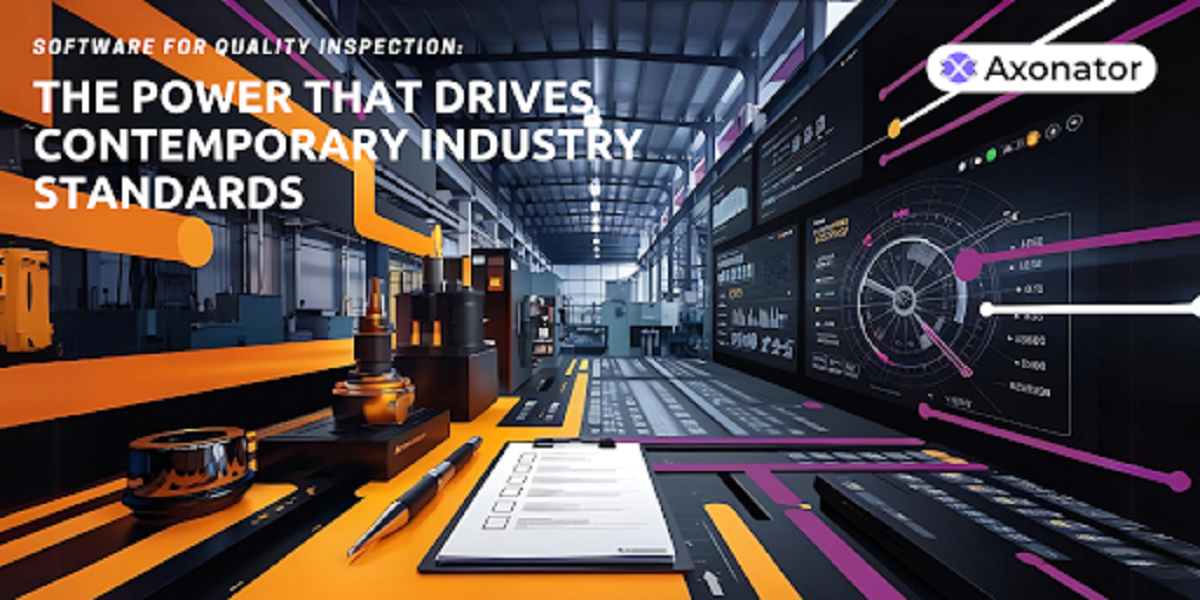
Software for Quality Inspection: The Power That Drives Contemporary Industry Standards
- By Jason Davis
- 19-12-2024
- Software
Quality inspection software is an essential tool that assists in conducting streamlined, automated, and highly accurate quality inspections. This is because quality inspection software is an essential tool for those industries that are seeking improvement in quality and efficiency, like manufacturing and pharmaceuticals. This piece of software is not only a blessing for reducing waste and saving expenses but also an essential component in achieving regulatory compliance and improving customer happiness. The adoption of real-time data analytics, automation, and insights driven by artificial intelligence in quality inspection software is accelerating across industries.
Review on Evolution of Quality Control-Hand Making Accuracy to Digital Precision of Examining Quality Control of articles was labor-intensive for all the time. Human operators and examiners were considering or measuring every article that was produced in comparison to prespecified standards. Despite this, it has led to quality inspection software that can even handle large-scale operations with unprecedented precision. This is because of escalated demands for accuracy, speed, and compliance.
The older processes took time to verify through manual checks, yet manufacturers today use automated sensors and machine learning to identify faults immediately. More importantly, quality inspection software ensures that manufacturers can optimize production efficiency by recording precise data directly from production lines. This will give manufacturers an opportunity to make adjustments on time, reduce rework, and eliminate waste.
The core functionalities of quality inspection software are real-time data analytics.
Quality inspection software is based on the capabilities of collecting and evaluating data in real time. When companies use devices enabled with the Internet of Things, they can continuously monitor their manufacturing lines for discrepancies. If something goes wrong, such as a sudden temperature change along the food line, it will immediately alert the responsible team that corrective action must be done with timely means.
For instance, automobile manufacturers employ sensors that are placed along the assembly line to detect small defects in the vehicle parts. This information enables them to accelerate without disrupting the production flow.
Automated Material Flaw Detection
Advanced quality control inspection software utilizes machine vision, allowing it to capture high-resolution pictures of items. These pictures are then processed through algorithms that identify any defect or inconsistency that may exist. Machine vision can detect defects in circuit boards, a crucial stage of preventing faults in the final product. Such an example is the production of electrical components.
Management of Compliance In addition to Traceability
This is especially true for sectors such as pharmaceutical and food, where compliance is frequently challenging and expensive. Quality inspection software automatically captures and categorizes compliance data, which means companies can maintain traceability from raw ingredients to final products without any extra effort. Quality inspection tools are used by pharmaceutical industries to track every stage of production, which ensures regulatory requirements are met and there is a thorough record of documentation.
ERP and Management Information Systems
The quality inspection software interfaces with the already existing ERP and MES platforms. This means the quality data collected from many departments is all consolidated through this interface in order to affect decisions related to procurement, inventory, and supply chain management without a hitch.
Integration of inspection software with enterprise resource planning systems facilitates better overall production planning in the automobile sector. The integration allows for adjustments in inventory to be made immediately and ensures optimization of logistics based on the observations made during inspections.
1. Quality inspection software is important since it can ensure the consistency of products and reduce waste in manufacturing industries.
For any business in a high-precision industry such as aerospace or electronics, it is imperative to adhere tightly to standards. Regarding this, quality inspection software becomes a very critical parameter. The automation of inspection results in these industries identifying problems at a relatively earlier stage, resulting in savings on rework costs and minimizing the likelihood of delivery of defective items to customers. Due to this automation, manufacturers also dynamically change their activities, thus helping the manufacturers ensure that all batches of production come out uniformly.
2. Automobiles: Enhanced Safety for Clients without Recalling
Quality inspection software is something essential in the automobile industry; this ensures safety in the manufactured vehicles, like the capability to detect faults automatically from the structures of automotive and flaws in electrical parts that are detected very quickly; it saves manufacturers the expensive work of assembling bad or faulty parts. In this highly sensitive industry, a call back can be an activity too expensive and damaging for its reputation; thus, detecting something that may lead to a defective product is very much an early detection.
3.Precision in Pharmaceuticals: How to Meet Regulatory Compliance in the Pharmaceutical Industry
Quality inspection software can ensure a company complies with the very stringent regulatory requirements by the Food and Drug Administration in pharmaceuticals. They will trace the entire manufacturing stage of any chemical compound, even down to final packaging. With this software, every pharmaceutical company is in an improved position to ensure that all its batches are free of risks and are safe as far as potency levels are concerned.
This software is helpful for the production of voluminous compliance documents, which also aid easy regulation audits.
4. Food and Beverage: In a bid to ascertain their safety and traceability.
In the food and beverage industry, quality inspection software acts as a monitor that keeps watch on many parameters during production. Parameters checked are temperature, humidity, and the potential for contamination. For instance, how dairy farmers use quality inspection software to monitor the pasteurization procedures. This thus helps minimize the chances of bad products hitting the shelves and ensures products are in line with health regulations.
Quality Inspection Software Innovative Technologies for Quality Assurance
Quality inspection software is no longer just a scope for traditional quality check-ups, as the evolution of technology in this regard is unceasing. Some of the new-age technologies that are revolutionizing quality management are discussed below:
Artificial Intelligence and Machine Learning for Predictive Quality Control
The quality inspection software can use machine learning to make predictions regarding the probable trends that could result in quality issues based on the data which has been reflected in the past. This allows algorithms to alert teams before probable faults happen through the assessment of trends, enabling manufacturers to take preventive action.
For instance, quality inspection in chemical manufacturing by AI can analyze past production data and predict likelihoods of machine failures. This, therefore, reduces the incidence of downtimes without scheduled stoppages, and output is of a consistent quality.
Machine Vision Application in the Detection of Defects
Because it can capture images of high resolution and conduct real-time analysis on the images, machine vision is revolutionizing the detection of defects. Two industries that will benefit the most from its use are microelectronics and high-end automobile parts. These are businesses in which even small flaws can lead to major product problems. This technology is also applied in the food manufacturing industry, where it helps in identifying any sort of physical defect or contaminants that might be present in fresh products.
AR Application to Enhance Quality Control Checks
Quality inspections with augmented reality being an essential tool in that aspect are pretty common today. Augmented reality allows the operator to see quality criteria in real-time. Digital overlays portraying possible quality defects are now clearly visible to the observer through the augmented reality glasses.
For example, augmented reality (AR) can be applied in the aviation manufacturing industry; it can offer the engineers visual direction on aircraft parts as they inspect them. Therefore, the likelihood of human mistake when assembling or maintaining an aircraft reduces.
Enabled Sensors through IoT for Ongoing Monitoring
The production settings could be monitored continuously by making use of sensors enabled through the application of the Internet of Things (IoT). These sensors record, in real time, data regarding variables such as temperature, pressure, and vibration. Based on this knowledge, there is a potential for proactive quality control by identifying environmental conditions that have a likelihood of causing faults in the product. For example, Internet of Things sensors are used in the pharmaceutical production field to measure regulated environments, including cleanrooms, to ensure that the environment remains in the acceptable range.
Best techniques that have been used so far in the implementation of quality inspection software Define Quality Objectives You Want
Before setting up quality inspection software, it is absolutely essential to develop very clear quality objectives that are in line with the objectives of the business. Some identified requirements and pain spots may help ensure that the software meets your operational needs satisfactorily. For example, the manufacturer of electrical equipment whose dominant objective is to minimize failure rates must include first and foremost consideration for machine vision capabilities in the process of making a choice of software to be used in its application.
Invest in Employee Training That Is All the Way Through
With high-demanding quality inspection software possibly demanding to run, therefore, perhaps this will require trained employees who may be needed in support, the optimization of benefit software could be enhanced when intensive training is administered about the capabilities of such kind. Apart from that, ensuring updates in the new feature regularly is provided for them, thus the employee becomes maximally utilizing software software.
Software should scale appropriately.
Together with this growth in businesses are the increasing demands for quality. The choice of quality inspection software that grows with production demands is quite important. This software shall be able to accommodate any extra features or expanded data capacity as required.
Developments in Quality Control Software by the Near Future
It is expected that quality inspection software will be increasingly loaded with more sophisticated technology as the industry develops further, which will continue to make quality control capabilities more powerful.
Increasing incorporation of Robotics and Automation for Higher Efficiency
Robotics and quality inspection software are opening a door for wholly automated-controlled quality control procedures. Such automated robotic arms, which can be installed with inspection sensors, are capable of working in severe settings where human worker safety is simultaneously preserved along with high quality standards.
Bigger data sets and improved data analytics
With such ability to analyze large volumes of quality data, companies will be able to find insights with potential for continuous improvement. Analysis of large volumes of data may help manufacturing see patterns and optimize operations, as well as predict possible problems that will inherently reduce waste and improve quality.
Improved Traceability with Blockchain Technology
Another opportunity that can be tapped for using blockchain technology is by improving traceability of production to leave an irreversible record at each step of the way. Such transparency naturally increases accountability and compliance—a highly relevant requirement in industry segments like pharmaceutical and food companies, which value traceability very highly.
As we navigate the complexities of today’s competitive global marketplace, the importance of precision, efficiency, and compliance cannot be overstated. Quality inspection software has become an indispensable tool for businesses aiming to gain a competitive edge. By adopting advanced quality management systems, organizations can enhance their operational capabilities and unlock significant benefits that drive profitability and market resilience.
This software streamlines inspection processes, allowing companies to ensure that products meet stringent quality standards before reaching consumers. Identifying and rectifying potential issues in real time minimizes errors and waste, ultimately leading to improved reliability. In a world where product quality can make or break brand loyalty, delivering consistent excellence is crucial for maintaining a positive reputation.
Investing in cutting-edge quality management systems also positions companies as leaders in their industries. It signals a commitment to excellence that not only builds customer trust but also opens doors to new business opportunities. In an environment where regulatory compliance is paramount, those utilizing quality inspection software can more easily navigate industry standards, avoiding costly fines and disruptions.
As consumer expectations for superior quality continue to rise, organizations that embrace innovative quality inspection tools will find themselves better equipped to meet these demands. By staying ahead of the curve, these businesses can effectively capture market share and adapt to the ever-evolving landscape.
The integration of quality inspection software is not merely a strategic investment; it’s an essential step for any organization looking to thrive in a market that increasingly prioritizes quality, efficiency, and reliability. The future belongs to those who recognize the value of quality in every facet of their operations, and this technology will undoubtedly play a pivotal role in their success.
Author

Jason Davis
Jason Davis, a senior manager at Axonator Inc., a leading developer of no-code mobile app solutions that automate checklists, improve reporting, and streamline workflow processes to boost operational efficiency and compliance, provides this piece.
Recent blog
.jpg)
Role of DEX Development in Decentralized Finance
Technology | 24-09-2026.jpg)
How to Evaluate Outsourced Link Building Without SEO Risk
SEO | 23-09-2026.jpg)
Optimize Salesforce Data Before Deploying AI Agents
Salesforce | 22-09-2026