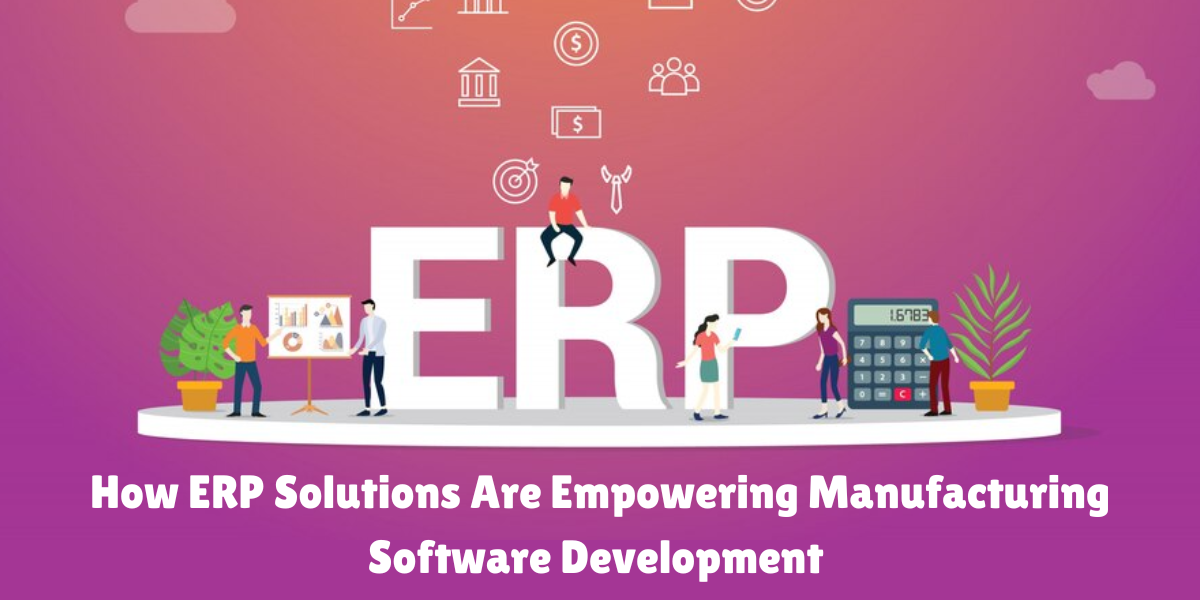
How ERP Solutions Are Empowering Manufacturing Software Development
- By Niraj Jagwani
- 21-02-2025
- Software
There has been a colossal transformation in the manufacturing sector and the focal points of this paradigm shift are the transformative technologies that have automated those mundane tasks and accelerated production cycles. However, there is another advanced player, creating the buzz in manufacturing software development. Yes, we are talking about enterprise resource planning solutions, which remain at the core of this transformation, allowing manufacturers to innovate, streamline processes, and enhance productivity.
One of the biggest reasons why manufacturing industries are now inclining more toward ERP tools is that they can seamlessly integrate core business processes, including production management, inventory management, warehousing, scheduling, and simplifying financial tasks. Thus, manufacturers can easily and quickly access a unified platform that minimizes errors, eliminates inefficiencies, and enhances decision-making.
In this article, we are going to discover how manufacturing ERP software is revolutionizing end-to-end production processes. We will cover the indispensable features, benefits, and real-world applications that define this space.
Key Features of ERP in Manufacturing
1. Integrated Modules
This is one of the key attributes of the ERP systems, whereby it manages to incorporate all core processes for manufacturing. Contrasting the standalone systems, in ERP systems, all departments like purchasing, production, finance, and human resources are linked so that information flows across seamlessly. For instance, in case the production group updates the status of the raw materials, the procurement unit would easily respond by re-ordering stock.
2. Data Analytics
Data is regarded as the main staple food for manufacturing execution systems. ERP systems have presented real-time data analytics, hence producing actionable insights about the operational processes. Manufacturers have the options and the means to monitor their key performance indicators such as product efficiency, cost per unit, and delivery timelines, which makes them always competitive.
3. Scalability
The production scales keep increasing, as do the complex functions of various operations. However, ERP systems are probably scalable-organisationally scalable-they allow a business to add further modules, users, or new features without disrupting operations.
4. Automation
Automation is at the heart of ERP systems. By automating repetitive tasks such as generating invoices, updating inventory records, and scheduling production cycles, ERP saves time and minimizes human error. This ensures consistency and accuracy across processes.
5. Customizability
ERP systems can cater to different specialties. Every company has different needs, and thus, ERP can be made as per requirements. This could be integrating existing equipment with embedded modules for that industry into the ERP software workflow to be as efficient and painless as possible.
6. Advanced Reporting and Business Intelligence
Today as times are changing so do companies have integrated advanced ERP systems on the front of reporting tools and business intelligence features that can produce extensive reports and make in-depth analyses possible.
7. Real-Time Dashboards
Such features help the decision-makers extract believable knowledge as an action into operational performance, identify trends, and fine-tune workflows. For instance, dashboards can provide visual representations of sales trends and production metrics, alongside profitability ratios enabling fast and data-driven decisions among the executives.
8. Cloud-Based ERP Capabilities
Modern ERP manufacturing software is progressively embracing cloud-based infrastructures, which provide scalability, accessibility, and cost-effectiveness. These cloud ERP systems allow manufacturers to retrieve essential data from virtually any location, fostering effortless collaboration among teams spread across different geographical areas. This transition removes the necessity for costly on-premise hardware, thereby lowering IT overhead expenses and enhancing disaster recovery capabilities.
9. Mobile ERP Access
Mobile compatibility is a fresh trend in manufacturing ERP software. It enables managers and employees to oversee production processing, check stock levels, and check the status of orders solely through smartphones or tablets. This easy availability has led to better responsiveness and relations, as well as fast decision-making, even when being outside the company location.
10. The Integration of Artificial Intelligence and Machine Learning
Today, predictive analytics and intelligent automation have been introduced in ERP by AI and ML technologies. These innovations serve to forecast demand or predict maintenance needs, as well as to improve the efficiency of quality control processes. For instance, AI algorithms can seek out regular usage patterns of equipment and forecast potential failures so that manufacturers can carry out preventive maintenance to reduce downtime as well as increase the expected lifespan of their machines.
11. Connectivity Using IoT
The IoT-enabled ERP systems are designed to acquire data instantly from sensors placed on machines, warehouses, and transport networks. The degree of connectivity integrated here will also render tracking and tracing better to enable efficient inventory management and predictive maintenance.
How ERP is Fueling the Manufacturing Software Development
1. Streamlining and Simplifying the Production Process
ERP systems are designed to streamline production through the automation of scheduling, allocation of resources, and utilization of equipment. These systems also provide real-time insights into production bottlenecks such that the managers make quick adjustments. For example, a factory producing automotive parts can have its ERP systems monitor machinery, and track production schedules, and raw materials utilization while reducing idle time.
2. Improving the Inventory Management
Inventory mismanagement usually has disastrous consequences, like stoppage of production or excessive stockholding. ERP systems cater to the issue through real-time perspectives on stock levels, reorder points, and supplier lead times. With IoT sensors, AI, and some warehouse management system integration, manufacturers can automate inventory tracking, ensuring that materials will be available just in time. This enables principles of lean manufacturing to be implemented, eliminating waste and increasing efficiency.
3. Deriving Quality Control in Products Through Data
Manufacturers wish to ensure that their products are produced to the highest standards with minimal defects. An ERP system performs this function by monitoring processes at every step in quality control from start to finish. Integration of sensors and quality management tools provides alerts from ERP if any metric is not within the defined standards, giving a corrective opportunity before defect accumulation. This keeps waste down and increases customer satisfaction.
4. Accessing Real-Time Insights for Warehouse Management
ERP-enabled warehouse management systems empower manufacturers with manual and automated stock management. Real-time visibility would keep stock levels transparent while reducing errors and increasing order accuracy for applications. Integrating this with production and supply chain processes provides rapid operations at reduced costs with improved efficiency, leading to a greater customer satisfaction level at higher profitability.
5. Improving the Supply Chain Management Coordination
The lifeline of any operation, manufacturing or otherwise, is the supply chain, and ERP is responsible for its smooth operation. It provides real-time updates about supplier deliveries, transport schedules, and the level of inventory to enhance collaboration between the stakeholders. Manufacturers can use predictive analytics to identify supply chain interruptions before they occur so they can develop contingency plans that diffuse risks..
6. Optimizing the Overall Manufacturing Costs
ERP systems facilitate the manufacturing software's real-time visibility into opportunities for saving costs and visible bottlenecks in production, energy consumption, and labor allocation. Real-time data usage gives manufacturers minimum overtime expenses by optimizing shift schedules, with maximum energy savings being accrued from automating equipment shutdowns when they are not on peak. All these savings go a long way toward the bottom line.
7. Streamlining Product Lifecycle Management
Such broadened functions of ERPs toward product lifecycle management features will help follow a product from design and prototyping to the delivery of that product by the manufacturer. This integration allows tandem work to be performed by design and production teams to reduce errors and speed time-to-market. For instance, a manufacturer can simulate a production process and determine which area of that process may develop a bottleneck and readjust it in real time in an ERP system.
8. Supporting Lean Manufacturing Practices
The principles of lean manufacturing dictate that there should be minimal waste and maximum productivity. ERP systems thus promote lean practices through real-time JIT inventory management, by tracking production efficiency and redundancy elimination in processes, and data analytics to monitor resource use and energy consumption.
9. Optimizing and Improving Warehouse Management System
ERP systems include optimizing warehouse management systems by integrating with the relevant tool to simplify end-to-end product storage and workflow movements. For this, it connects seamlessly to the supply chain process to track supplier performance and manage contracts. The goal is to provide goods to end users at the right time and a better experience.
10. Improving Production Scheduling Using AI Algorithms
Dynamic production scheduling based on labor availability, material inventory, and equipment status is enabled by AI-based ERP solutions. The most advanced ones even use machine learning to predict potential delays and suggest optimal schedules for meeting the highest efficiency in resource use. For instance, manufacturers can use this technology to readjust production runs immediately if a machine becomes unexpectedly unavailable.
The Core Benefits of Manufacturing ERP Software
The adoption of manufacturing software having ERP capabilities improves operations by linking procedures improving efficiency and offering real-time reporting. From production to inventory, this empowers manufacturers to reduce costs and compete and satisfy changing demands in a fast-changing world.
-
Operational Efficiency
ERP systems remove duplicity in processes, automate manual tasks, and present a common stage of operations. A result of this streamlining is overall productivity improving and error rates reducing which increases output using fewer resources.
-
Flexibility and Agility
Manufacturers need to adapt promptly to the ever-changing markets. Business intelligence offers a real-time tool for responding flexibly to demands of time fluctuation, supply chain disruption, or regulation changes.
-
Regulatory Compliance
There is no debate on compliance. The juice of an ERP on manufacturers is found in the elimination of bureaucracy in documentation, tracking alterations, and generating audit trails, thus ensuring the adherence to standards such as ISO certifications, safety regulations, and environmental norms
-
Enhanced Customer Satisfaction
By streamlining operations and ensuring timely deliveries, ERP systems contribute to improved customer satisfaction. Real-time order tracking and consistent quality assurance also enhance trust and loyalty among clients.
-
Improved Workforce Management
Managing the workforce is thus simplified by the ERP with payroll automation, shift scheduling, and performance tracking. Helps keep a resource optimally allocated and cuts overstaffing and underutilization.
-
Better Collaboration and Communication
Centralizes intra-company communication with shared data by teams. Discuss updates or fix issues in real time, creating an openness and culture of teamwork within the organization. This would be crucial where teams are based at different locations, and constant synchronization is needed.
-
Faster Time-to-Market
Bolstered by crisis management, the introduction of products to the market is quickened due to streamlined production processes, automated workflows, and improved supply chain management by ERP systems. Manufacturers are fast enough to respond to market demands and are as timely as possible in introducing new products. Thus, they gain competitive strength.
-
Risk Management and Disaster Recovery
ERP systems have a risk management tool that throws light on the probable risks that can be possible in such an enterprise supply chain within production lines or even in inventory systems. Another feature includes disaster recovery in various cases, thus keeping the business moving between emergencies. Such data can be protected from natural physical damage and cyberattacks. Manufacturers save data securely in cloud storage.
Real-World Use Cases of ERP in Manufacturing
Business process continues to manufacture intervention dramatically by transforming operations, improving efficiencies, and allowing the enterprise to rely on analyzable and data-driven decision-making. Such statements dovetail with the realities of case studies from different sectors demonstrating use cases where industries deployed ERP to ensure that production, inventory, and supply chain processes run seamlessly.
-
Automotive Industry
Auto giants such as Toyota use ERP for these purposes to consolidate their global supply chains and achieve an effective plant. It is capable of tracking the complete component chain starting from procurement up to the assembly activities to eliminate delays and achieve high-quality output.
-
Food and Beverage Industry
The food industry demands strict adherence to safety and quality standards. Nestlé uses ERP to ensure compliance with international food regulations, manage batch tracking, and optimize inventory for perishable goods.
-
Electronics Manufacturing
Samsung, like many other manufacturers in the electronics industry, has also adopted an ERP system that enables just-in-time (JIT) manufacturing. Integration of this ERP with intelligent sensors allows the company to provide efficient stock monitoring, demand prediction, and production run scheduling.
-
Textile Industry
In very fast-paced industries like fashion, ERP allows for rapid decision-making in managing orders. An example of a company that uses ERP is Zara, and the company uses it to keep track of world inventory levels and maintain supplier relations to guarantee timely product availability.
-
Aerospace and Defense
Boeing is an example of an aerospace manufacturer that uses ERP solutions. These arrangements are made so that complex production processes can be made compliant with very strict regulations. An ERP system thus gives insight into production schedules and tracking of material usage and procurement, thereby cutting down delays and improving precision.
-
Construction Material Manufacturing
Construction material manufacturing companies put in place ERP to control their inventory levels, manage bulk production runs, and enforce prompt delivery. Coordination with logistics tools is also possible to further integrate transport scheduling and track shipments in real-time.
-
Medical Device Manufacturing
ERP comes in as a general practice for medical device manufacturers to manage compliance, inventory control, and quality assurance. It enables them to maintain traceability, conduct audits, and trace compliance report generation throughout the manufacturing process.
-
Renewable Energy Manufacturing
ERP systems are used by solar panel and wind turbine manufacturers to help track their production processes, monitor energy consumption, and manage their complicated supply chains. Optimization of resource usage and waste reduction is also supported by these tools as part of sustainability initiatives.
Conclusion
ERP systems today have become the catalytic tools to drive efficiency, innovation, and growth as the manufacturing industries change and transpose this digital transformation age. ERP solutions integrate with artificial intelligence, the Internet of Things, and cloud computing, and they future-proof businesses from emerging difficulties while simplifying their operations.
Investing in manufacturing software, that uses ERP application support, is not an option for any manufacturer who wants to remain competitive but is more of a necessity. Lowering production costs, allows smart manufacturing practices to deliver, among others, operational excellence through cost-effective management of complexity.
ERP systems will increasingly play an even greater role in manufacturing in the time to come with advancements in technology wherein businesses can leverage the data effect, automation, and analytics to achieve long-term growth.
Author

Niraj Jagwani
With a profound experience of more than 15+ years in the IT industry, Niraj Jagwani is the CEO and Co-Founder of TRooTech, a leading custom software development services company since 2014. He is a passionate technology enthusiast and visionary leader dedicated to driving innovation, delivering scalable digital solutions, and empowering businesses through cutting-edge manufacturing software development strategies. He loves to share the latest trends and insights on software development that empower businesses globally.
Recent blog
.jpg)
Role of DEX Development in Decentralized Finance
Technology | 24-09-2026.jpg)
How to Evaluate Outsourced Link Building Without SEO Risk
SEO | 23-09-2026.jpg)
Optimize Salesforce Data Before Deploying AI Agents
Salesforce | 22-09-2026