How AI and Recruitment Marketing Tools Can Simplify Hiring Processes
- By Sajan Prajapati
- 10-03-2025
- Augmented Reality
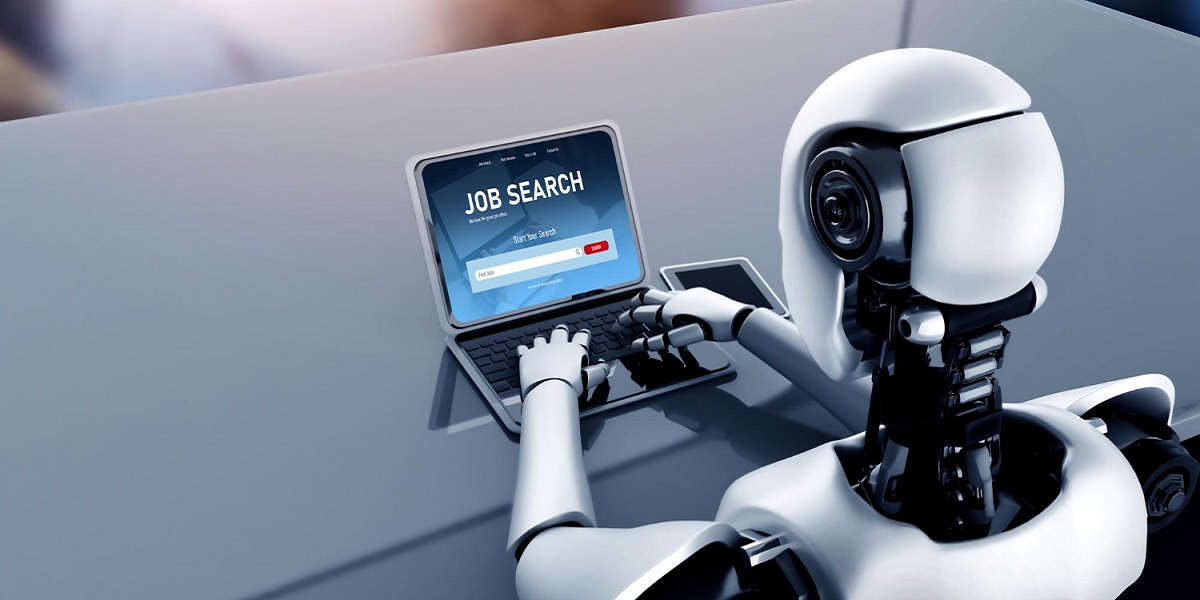
Recruitment is an important determinant of the success/failure of an organization in many ways. An exceptionally talented new worker can catalyze much better organizational performance. Still, an extremely bad worker can hurt organizational productivity and morale. Recruitment has been changing continuously for years. Today it is the use of AI techniques and recruiting marketing tools at the forefront of bringing about a transformation in how work gets done. Not only that, these technologies not only assist with bettering the recruitment process for recruiters but also assist with bettering the process for job seekers. This article describes how AI and recruitment marketing software can streamline recruitment, make it faster, and lead companies to hire the best talent sooner.
1. The Traditional Hiring Process and Its Challenges
The traditional recruitment process is completely manual and sometimes extremely annoying. HR hiring managers spend days screening resumes, interviewing candidates, and assessing candidates' fit. This approach is not only laborious but also psychometrically vulnerable. Recruiters usually have to whittle down hundreds of resumes that do not comply with job requirements, and applicants could slip through the net because of human imperfection or errors.
In addition, traditional methods were not particularly candidate-friendly. Job seekers had to apply manually, follow up consistently, and sometimes never hear back. The process lacked personalization, and candidates could be left feeling disengaged. For that reason, corporations often battled to find and keep good-ranked executives.
2. Streamlined Application Processes
A long or complex application process can deter potential applicants from filling out their applications. Recruitment marketing applications can be made easier by embedding such as single-click apply buttons, and mobile-friendly interface. In addition, the CV builder app type is another tool that can help job seekers design a professional and personalized CV, thereby more efficiently complying with the job's requirements.
AI can also process submitted applications, rank them according to relevance, and prioritize the processing of candidates to the top of the candidate's list. It removes the requirement for manual filtering and speeds up the hiring process.
3. AI-Powered Candidate Screening
Acquisition speed is limited by application flow processing. AI tools simplify this process by automating candidate screening. AI resume screeners are based on Natural Language Processing (NLP) and machine learning to mine resumes and applications using appropriate keywords, skills, and experience requirements. Such instruments can choose the best representative candidate, exclude those ineligible, and present the most appropriate CVs for further screening.
Automating this work means recruiters no longer need to review hundreds of resumes manually. The AI system scores candidates according to their qualifications and facilitates the recruiter's filtering of candidates most likely to be good hires. This time-saving outcome also improves the system's reusability in overcoming biases that people can inject into choosing a candidate.
4. Smart Job Matching and Personalization
AI is not just resume screening; AI may also be used to improve the hiring job matching process. Using sophisticated algorithms, AI tools can analyze candidates’ profiles and match them with the right jobs based on their skills, experience, and preferences. It is hereby ensured that positions are provisioned to applicants most suited to undertake the job at stake in a way that improves both job applicants and their employers.
Moreover, AI-powered recruitment marketing tools can personalize job postings. These tools are collections of techniques that measure how to target the type of Applicant companies want to hire and how compelling the job descriptions will be for them. Tailoring language, focusing on certain competencies, and keywording help make the offer attractive to the right candidates.
AI, for instance, can personalize job postings to make them more attractive to tech-savvy professionals and showcase the implementation of next-generation technologies and career options. This results in a higher candidate engagement rate and a tighter match between occupations.
5. Candidate Relationship Management (CRM)
Recruitment marketing apps that use Artificial Intelligence (AI) based recruitment also provide Candidate Relationship Management (CRM) capabilities to enable recruiters to build a 'long-term client relationship' with a prospective candidate. [these technologies] allow the recruiter to keep a database and store all candidate information in a structured way, managing the communication and relationship with the candidates permanently. The feature is also highly applicable for talent pipeline construction.
Applicants-track CRM systems automatically follow up with candidates, remind them of the interview, and announce job openings. They can also contact candidates not selected for a job by informing them of future vacancies. By developing relationships with applicants, companies can guarantee that a pool of qualified applicants will be available when the appropriate new job becomes available.
CRM systems also allow recruiters to log the candidate's progress through the hiring pipeline and can, therefore be used to optimize the candidate's journey. Companies can increase the overall recruitment efficiency through continuous candidate engagement in the recruitment process.
6. Enhanced Candidate Experience
One positive effect of applying AI and recruitment marketing software is the possibility of improving the candidate experience. Job seekers are frequently disappointed if the hiring process is slow, opaque, or hard to understand. AI-enabled tools solve these issues by providing an unobserved and unobtrusive experience.
For instance, AI chatbots can answer candidate questions in real time, provide candidate-specific information about the hiring process, and guide candidates in completing the application process. Chatbots can be accessed from start to finish (24 hours/day, 7 days/week), so those eligible people get any information they consider appropriate for the application process. Not only that, candidate pre-screening can even be carried out based on the questions asked regarding the candidate's experience and the applicant's self-assessment of the candidate's application before uploading it into the database, which will inevitably save time and iterations for the candidate and reader.
In addition, recruitment marketing applications guarantee candidates are updated promptly throughout all recruitment phases. AI apps can automatically play individually calibrated messages and notifications about an interview and a status, so job applicants will never be blind. Achieving such transparency can result in a good experience, enhancing the company's perception as an attractive employer.
7. Improving Diversity and Reducing Bias
Artificial Intelligence (AI) and recruitment marketing tools also have great potential to drive diversity and inclusion. When human prejudice is removed from the hiring process, AI can ensure that a candidate is judged based on his or her assets and skills, not otherwise. This is especially relevant when constructing mixed working environments and forming subconscious bias in recruitment.
AI tools techniques can identify and neutralize biased expressions in job descriptions that could, however, unintentionally exclude some groups from the application process. For, the labels "aggressive" or "dominant" can be attractive to the male applicant and "supportive" or "collaborative" to the female applicant. Using a gendered language and focusing on credentials and occupational skills resume, hiring managers can help make job postings more inclusive.
Furthermore, AI technologies can eliminate screening assessments of resumes to practice discrimination based on gender, age, or ethnicity and overcome the bias involved in the selection of jobs.
8. Streamlining the Interview Process
AI tools can significantly enhance the interview process by automating scheduling and providing deeper insights into candidates’ suitability. For example, artificial intelligence-based video interviewing systems can enable candidates to answer a question of choice that is subsequently evaluated by the system. The AI derives verbal and nonverbal indicative behavior (e.g., prosodic tone, affective facial expression, and behavioral body attitude behavior) as it forecasts application behavior and communication competence.
The technology has the potential to give recruiters deep insights into a candidate's personality, which, in turn, can help bring about better decisions. It can also address scheduling conflicts by automatically scheduling the interview, which leaves recruiters' and job seekers' time vacant.
In addition, the AI assistant can produce a second suggestion of an add-on question upon receiving the candidate's answer to an interview question with ad hoc central and contextual relevance. Ultimately, this results in a physically stronger interview process, where bias is reduced to the greatest extent, and process fairness is increased.
9. Optimizing Recruitment Marketing Campaigns
Recruitment marketing tools enable companies to effectively market job openings on various marketing channels, including social media, job boards, and email marketing. These instruments can make specific campaigns that are relevant for the right candidates using demographic information, behaviors of job searchers and historical trends of applicants.
AI-driven marketing tools attribute functionality to monitoring the effectiveness of different campaigns and channels and deliver evidence-based insight into the execution that results in optimal outcomes. For instance, if recruiting a company's job offer is much more successful on LinkedIn than on Indeed, recruiters can adapt their strategy to make full use of their time on LinkedIn. This optimization allows companies to hire candidates with the right skills at a lower cost of recruitment.
Further, recruitment marketing instruments help companies create a strong employer brand. Through an ongoing dialogue with the pool of applicants and the company's culture, values, and perks, the company can position itself as an employer of choice. IT tools measure branding performance and offer recommendations on enhancing the employer's image.
10. Cost Savings and ROI
Employing Artificial Intelligence (AI) and recruitment marketing software makes conventional recruiting methods more affordable. Organizations can save time and resources through automated, repetitive activities, including resume screening, interview scheduling, and post-visit follow-up correspondence. This also reduces the need for large numbers of recruiting staff or the involvement of external agencies.
Similarly, AI can further optimize paperless job board postings by targeting the job boards that attract the most valuable candidates. Due to their efficiency gains and reduced waste, such tools produce higher recruitment ROI (Return on Investment).
Also, AI-generated picks of the most probable successful applicants help minimize the evils of a bad hire. When the selection process's accuracy rate increases, this results in higher employee turnover and a more cohesive workforce.
11. AI's Role in Passive Candidate Engagement
One of the many possibilities that AI can provide is passive candidates. Passive applicants are those who are not actively looking for a job but might be looking for the right opportunity. Nevertheless, dealing with passive job seekers is different from dealing with active job seekers, and it is feasible for an AI to optimize this to a great extent.
AI-driven recruitment marketing software would seem capable of monitoring and profiling candidates' web-based activities, the candidate/community interaction on social media and other professional websites, and, based on likely future recruitment activity, identifying "passive" candidates that might otherwise attract attention. Later, these can provide individualized messages or tips for work to those candidates, motivating them over the long term. Companies can establish relationships with passive candidates to ensure that companies are at all times in a position to fill a job opening with any of that talent.
Through this sustained engagement process, companies are expected always to be ready to maintain a talent pipeline that minimizes the time spent searching for candidates during a position opening. AI can also improve these relationships by providing more bespoke content, e.g., on an individual's attention span, for job searches and company messaging, messages that keep them actively engaged and focused.
12. Data Security and Ethical Considerations
While the technology allows AI to offer a huge variety of potential benefits to the recruitment process, it remains a matter of public concern regarding what steps need to be taken by organizations to use this new technology responsibly. Privacy and security of a candidate's data are amportant coimportantons when applying AI-enabled tools to a candidate's data. Furthermore, by legal obligation, the employers are obliged to guarantee that the artificial intelligence systems will not violate the data protection law as demonstrated by the General Data Protection Regulation (GDPR) to protect candidate data.
In addition, AI tools should be used to reduce bias, and the recruitment process must be completely unbiased and representative. Although AI can potentially ameliorate human bias, it is not only not without bias, which can be embedded in the data it uses, but also perpetuates that bias with the data it is exposed to. Organizations need to carefully monitor the algorithms of IA systems and continuously audit them to verify their fairness and equality.
Furthermore, the explainability of AI decision-making is a factor in assuring applicants' trust in the system. Candidates are requested to be informed when AI is applied to the selection process and are expected to be able to access the process used to respond to their data. At the same time, this will also assist in maintaining good manners and respect for the interview participants, including using artificial intelligence in the recruitment stage.
Conclusion
Artificial intelligence and recruitment marketing tools have transformed the hiring process, automating candidate screening and interview scheduling, improving candidate engagement, and enabling diversity. These technologies simplify each element of the recruitment process, enhance workflow efficiency, and are valuable to both the recruiter and the candidates.
We expect to see more recruitment technology innovations with all these new technology companies sprouting. Enriched by Artificial Intelligence (AI) and recruitment marketing technologies, the recruitment cycle is changing and becoming more standardized, data-driven, and driver-centric.
Author

Sajan Prajapati
Sajan Prajapati is a content writer and digital marketing strategist specializing in SEO and content optimization. With over seven years of experience helping brands grow their online presence, he specializes in crafting engaging blog posts, articles, and product descriptions that resonate with readers and rank well on search engines. Sajan regularly writes for industry-leading blogs and enjoys sharing tips on content marketing and effective storytelling.
Recent blog
.jpg)
Role of DEX Development in Decentralized Finance
Technology | 24-09-2026.jpg)
How to Evaluate Outsourced Link Building Without SEO Risk
SEO | 23-09-2026.jpg)
Optimize Salesforce Data Before Deploying AI Agents
Salesforce | 22-09-2026