
Top 10 AI-Powered Platforms for Accelerating the Software Development Lifecycle in 2025
- By Priyanka Shah
- 22-07-2025
- Artificial Intelligence
Artificial Intelligence has infiltrated every stage of software development—and it’s not just hype anymore. From idea to deployment, AI is helping developers code faster, test smarter, and ship more confidently. What once took weeks can now be done in days—or even hours—thanks to intelligent automation.
In 2025, development teams are leaning on AI platforms to transform the software development lifecycle (SDLC) into a fluid, automated workflow. These tools offer everything from code generation, bug fixing, and design-to-code conversion, to smart deployment, vector-based search, and AI-native infrastructure.
Let’s dive into the top 10 AI-powered platforms that are redefining software development in 2025, starting with a rising star from the DhiWise ecosystem.
1. Rocket.new—Your AI Software Engineer for Web & Mobile Development
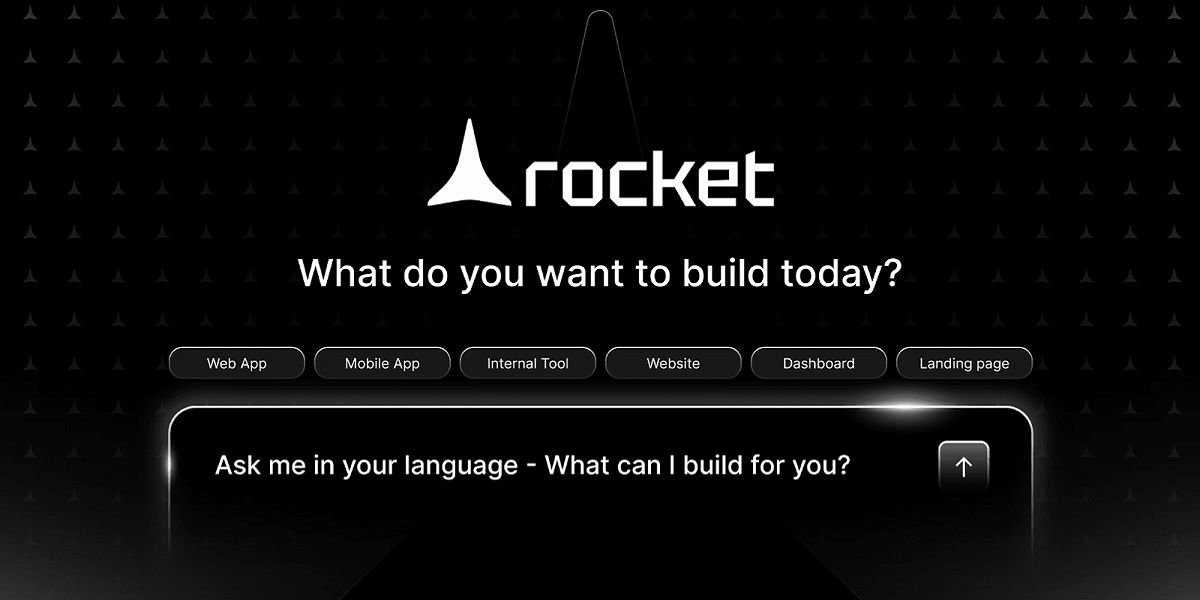
Rocket.new, built by DhiWise, is redefining the software development lifecycle by acting as your AI-powered software engineer. It enables developers, designers, and product teams to build production-grade web and mobile applications using natural language, Figma designs, or predefined templates—no extensive coding required.
This isn’t just another design-to-code tool. Rocket intelligently handles everything from frontend UI generation and component structuring to backend integrations, authentication, and deployment—all within a clean, developer-friendly interface.
Core Capabilities
1. Figma-to-Code Conversion
Rocket deeply analyzes Figma files and converts design layers into clean, modular code. It respects UI structure, detects reusable components, and translates Figma to Flutter, React, Flutter, Next.js and HTML.
2. Prompt-Based App Generation
You can describe features or interfaces in simple text (e.g., “Create a login screen with email and password”), and Rocket.new will generate the corresponding UI, logic, and routing structure. The conversational interface allows iterative refinement—so building apps feels like chatting with a developer.
3. Backend Logic & API Integration
Rocket connects your app to real-world data sources like Supabase, REST APIs, or webhook endpoints. It can generate backend logic such as user authentication, form handling, and state management, streamlining both frontend and backend flows.
4. Clean Code Output
Unlike many generators that output tangled code, Rocket produces clean, modular, and production-ready code. It uses established best practices, keeps code maintainable, and supports popular state management systems like Bloc, Provider, and Riverpod (for Flutter).
5. Asset & Performance Optimization
Fonts, images, icons, and other assets are automatically optimized for performance. Rocket ensures responsiveness across screen sizes and uses best practices to deliver fast-loading UIs.
6. Preview, Export, and Deployment
Rocket provides an instant preview of your application within the platform. Once ready, you can export the code directly to GitHub or deploy to Netlify. For mobile apps, Rocket allows code download and APK/Xcode project generation.
7. Smart Editing and Prompt Library
The built-in editor supports fine-tuning via chat, allowing you to make changes like “add pagination” or “connect this button to the dashboard.” A growing prompt library helps you accelerate workflows with reusable templates.
Supported Platforms
- Web: React, Next.js, HTML/CSS
- Mobile: Flutter (Android and iOS)
Ideal For
- Product teams and agencies building MVPs rapidly
- Designers wanting real-time, functional code from mockups
- Developers seeking to automate repetitive UI and API logic
- Non-coders or founders launching full-featured apps with minimal engineering effort
Why Rocket.new Matters
Rocket.new transforms the way modern software is built. By combining the power of AI with intuitive design and deployment workflows, it enables faster prototyping, shorter dev cycles, and cleaner code output. Whether you're building a simple landing page or a complex mobile app, Rocket by DhiWise gives you a complete development assistant that compresses weeks of work into minutes.
In 2025, when time-to-market is critical and developer resources are limited, Rocket empowers teams to launch with confidence—without compromising on quality, structure, or scalability.
2. GitHub Copilot X – The Next Evolution of Your AI Pair Programmer
In 2025, GitHub Copilot X is no longer just autocomplete—it's your full-stack dev assistant, built into your IDE and GitHub workflows.
Key Capabilities:
- Autocompletion with full function context
- Natural language PR review suggestions
- Unit test generation
- Inline documentation drafting
- Chat-based support within VSCode and JetBrains
Why It Matters: Copilot X understands your entire project context and helps you work smarter, not harder. Whether you're writing a new module or debugging legacy code, it's like having a senior engineer on-call 24/7.
3. Replit Ghostwriter – AI-Powered Browser-Based IDE for Instant Coding
Replit Ghostwriter brings AI development to the cloud with a complete IDE + AI coding assistant accessible in your browser.
Features:
- Autocomplete and bug fixes
- Contextual code explanation
- Live preview and deploy
- Starter templates for fullstack apps
- Multiplayer dev support for collaboration
Why It Matters: Ideal for hackathons, students, or solo founders—Replit makes it possible to build and deploy apps with AI assistance without installing anything locally.
4. Amazon CodeWhisperer – Enterprise-Grade AI Assistant with Security Context
Built for teams operating on AWS, CodeWhisperer is Amazon’s answer to Copilot—but with a focus on security, enterprise governance, and deep AWS service integration.
Features:
- Supports Java, Python, TypeScript, and more
- Code suggestion + security scanning in real-time
- Works with Lambda, DynamoDB, and other AWS services
- Compliance-aware code generation
Why It Matters: CodeWhisperer is perfect for companies building complex, scalable apps on AWS that require regulatory compliance and tight security.
5. Cody by Sourcegraph – AI That Understands Your Entire Codebase
Cody goes beyond autocomplete. It’s an AI developer that knows your company’s codebase better than most humans.
Key Abilities:
- Answers deep architectural questions
- Maps how functions relate across repositories
- Generates and explains pull requests
- Auto-docs internal APIs
Why It Matters: Cody is incredibly valuable for large engineering teams that struggle with onboarding, legacy code, and documentation debt.
6. Tabnine – Private AI Coding Assistant for Enterprises
Tabnine is designed for privacy-conscious teams. It runs fully on-prem if needed and can be trained exclusively on your internal codebases.
What It Offers:
- AI suggestions without cloud processing
- Team training models
- Language support for TypeScript, Java, C++, Python, and more
Why It Matters: Ideal for banking, government, and healthcare sectors where code cannot leave internal systems.
7. Snyk AI – Security-Powered AI That Finds and Fixes Vulnerabilities
Snyk AI has become a go-to tool for secure software development.
Capabilities:
- Detects known vulnerabilities in dependencies
- Suggests secure code alternatives
- Works across containers, cloud configs, and IaC
- Integrates with GitHub and CI/CD pipelines
Why It Matters: With DevSecOps gaining traction, AI-powered security checks are no longer optional—they’re mandatory.
8. MutableAI – Instant Code Cleanup, Modularization, and Documentation
MutableAI is like an AI janitor for your codebase—refining messy code into clean, modular, well-documented software.
It Can:
- Refactor code
- Write inline comments
- Turn notebook experiments into production code
- Generate documentation in markdown format
Why It Matters: Great for teams turning R&D prototypes into scalable applications—or for maintaining older codebases.
9. LangChain + Pinecone Stack – Backend Intelligence for AI-Native Applications
Backend engineers building AI-native software rely on this stack to manage workflows and memory.
Stack Breakdown:
- LangChain: Orchestrates prompts and AI agents
- Pinecone: Handles vector database storage
- Used in: Chatbots, semantic search, recommendations
Why It Matters: Enables developers to create applications that remember, reason, and respond like humans. This is the backbone of LLM-driven services.
10. Warp.dev – The AI Command Line Terminal for Developers
Warp reimagines the terminal with AI features built-in.
Features:
- Command suggestions as you type
- AI-generated explanations of CLI commands
- Syntax highlighting and blocks
- Workflow sharing
Why It Matters: Warp gives shell power users an AI edge. Especially useful in DevOps, scripting, and CLI-heavy workflows.
Wrapping Up: AI Is Not Just the Future—It’s the Present of Development
From Rocket.new’s design-to-code pipeline to Copilot’s contextual coding to Snyk’s automated security—AI is reshaping how we write, test, deploy, and maintain software.
By the end of 2025, development will be AI-native by default—meaning human ingenuity will increasingly focus on product vision while AI takes care of the repetition and structure.
Recap: Top 10 AI Platforms to Watch
- Rocket.new by DhiWise: Frontend automation, design-to-code
- GitHub Copilot X: Smart autocomplete + code chat
- Replit Ghostwriter: Cloud IDE + AI assistant
- Amazon CodeWhisperer: Secure, AWS-integrated coding
- Cody by Sourcegraph: Codebase-aware AI dev
- Tabnine: Privacy-first AI pair programmer
- Snyk AI: DevSecOps and vulnerability remediation
- MutableAI: Code cleanup + documentation
- LangChain + Pinecone: Backend memory + AI orchestration
- Warp.dev: Smart terminal with AI enhancements
What’s Next?
AI won’t replace developers—but developers who use AI will replace those who don’t. As teams look to scale efficiently and stay competitive, integrating platforms like Rocket.new, Copilot X, and LangChain into daily workflows will go from optional to essential.
The SDLC of the future is faster, leaner, and smarter—and it’s already here.
Author

Priyanka Shah
This blog is published by Priyanka Shah.
Recent blog
.jpg)
Role of DEX Development in Decentralized Finance
Technology | 24-09-2026.jpg)
How to Evaluate Outsourced Link Building Without SEO Risk
SEO | 23-09-2026.jpg)
Optimize Salesforce Data Before Deploying AI Agents
Salesforce | 22-09-2026