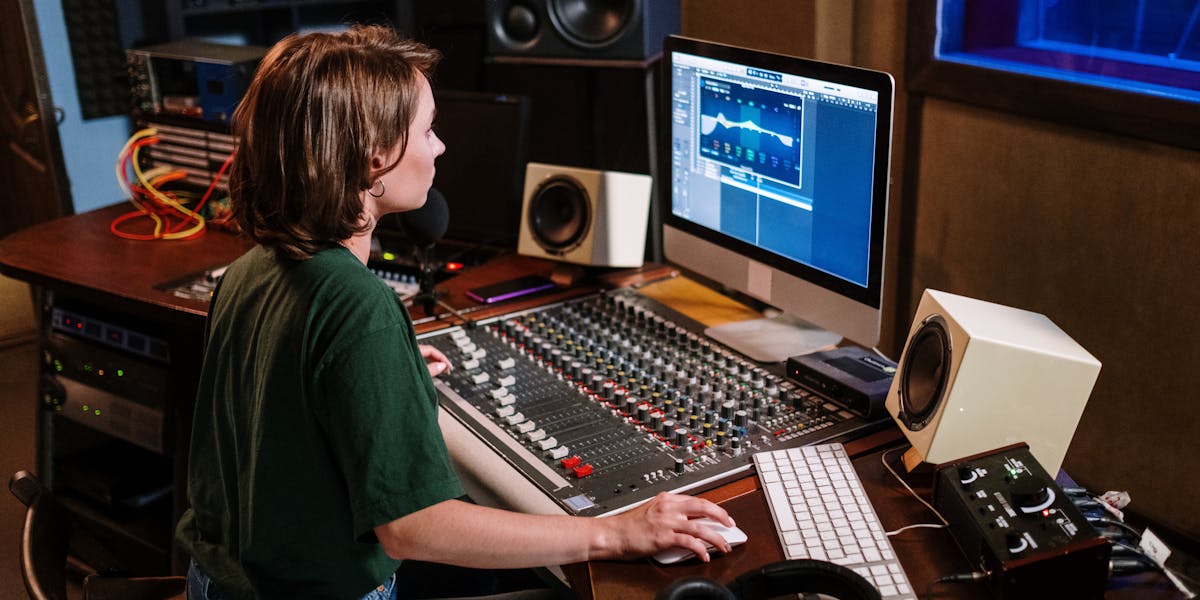
Strategies for Seamless Integration of AI in Sound Engineering
- By Paula Dean
- 24-06-2025
- Artificial Intelligence
No, you're not imagining it, AI really is changing all the industries, including the music and sound engineering industry. If you work in the field, you’ve more than likely already seen tools that can accomplish in minutes what used to take you hours. Does this mean that AI will take over some of the tasks?
Probably.
However – and this is important however – that doesn’t mean your job is going to disappear. What it does mean, though, is that it’s going to evolve – in fact, it already has.
The important thing to keep in mind here is that the engineers who thrive now and will continue to do so in the future are those who are not resisting the change.
Instead, they’re using AI to their advantage – to finish things faster, sound better, and stay two steps ahead of those who refuse to touch AI.
What we’re trying to say is that technology won’t replace you – it will just give you more control over creative and technical processes if you learn how to use it to your benefit. Here’s how you can do just that.
Know What AI Can Do and What It Can’t
Before you integrate anything, get specific about what AI is good at. Right now, machine learning is strongest in pattern recognition, signal processing, and repetitive task automation. In other words, it excels at things like vocal isolation, audio repair, mastering suggestions, and metadata tagging.
Tools like Mixea are a great example. It’s designed to analyze mixes in real time, giving precise feedback on balance, EQ, and loudness. You still make the final call, but AI handles the grunt work faster than your intern ever could.
This said, AI cannot replace your ear for creative direction. After all, it doesn’t know the emotion behind a track or how to build tension across a hook. But you do. So instead of worrying about AI automating away your artistry, use it to free up the time you spend dealing with petty tech issues.
Start With Workflow Enhancements
Overhauling your entire signal chain can paralyze a project. Instead, pick one friction point and test an AI tool that targets it. Suppose dialogue cleanup consumes your evenings.
Feeding takes through an AI denoiser before you reach for a surgical EQ can buy back hours. If gain staging feels like a chore, let an auto-level plugin normalize peaks so you start every mix on level ground.
When you approach the mastering stage, use a service such as LANDR or Ozone’s Master Assistant to generate a tonal blueprint. You still sculpt the final curve, but you start from a balanced reference rather than a blank slate.
A common breakthrough arrives when engineers treat AI as a second set of ears. After you finish a mix that feels ninety-five percent right, run it through Mixea or a similar checker. If the tool flags a 200-hertz buildup the studio monitors smoothed over, you can correct it in minutes instead of discovering the problem after client notes.
Strung together, these micro-adjustments clear entire days from your calendar, giving you space to chase more ambitious sonic ideas or simply breathe between sessions.
Solve the Adoption Problems Early
The biggest blocker to integrating AI is usually not the tech, but the team. Engineers can be very skeptical, so if you manage a studio or lead projects, be as transparent as possible. Let people know AI is not replacing them and explain exactly why you're introducing a tool. Be specific about how it fits into existing workflows without gutting anyone’s responsibilities.
If you’re worried about resistance, run side-by-side comparisons to prove AI-assisted workflows can improve consistency or turnarounds.
If you're a solo engineer, test with intent. Run your own mixes through AI tools, compare them to manual work, and A/B them on multiple setups. Track time saved and measure client feedback.
Keep Up With the Ecosystem
According to Allied Market Research, the global AI-in-media market will hit $12 billion by 2031, so make sure you're keeping up with the changes. No, you don’t need to chase every update, but you do need a baseline awareness of what’s coming.
Follow how platforms like Dolby, Spotify, and Adobe are experimenting with AI-based spatial audio, generative composition, and voice synthesis.
This will give you an edge because you’ll know when a tool’s just hype and when it’s something that might save you 20 hours a month.
So no, AI isn’t coming for your job. It’s coming with you to help you do it better. Under the hood, AI thrives on data pipelines. Engineers who pick up basic scripting—or at least grow comfortable invoking command-line tools—discover extra levers.
A weekend course in Python might teach you to batch-convert sample rates or auto-label thousands of foley clips for a film sound-effects library. If open-source speech-enhancement models intrigue you, a couple of evenings fine-tuning them on your accent-specific corpus can yield clarity unmatched by out-of-the-box presets.
None of this requires a doctorate; rather, it builds a habit of tinkering that compounds over time.
Plot a Road Map and Measure Progress
With greater automation comes new responsibilities. If an AI synthesizes a unique pad or percussive hit, clarify authorship in your contract.
When cloud services ingest audio to refine their algorithms, verify that the nondisclosure agreements you signed allow such sharing, or opt for on-prem solutions. Cultural nuance matters as well.
AI trained predominantly on Western commercial recordings may bias tonal decisions in subtle ways; counteract that tendency by supplying the system with stems that reflect the musical heritage of each project.
Clients notice these precautions. They recognize professionalism in the engineer who not only delivers on time but also safeguards intellectual property and cultural authenticity.
Author

Paula Dean
This blog is published by Paula Dean.
Recent blog
.jpg)
Role of DEX Development in Decentralized Finance
Technology | 24-09-2026.jpg)
How to Evaluate Outsourced Link Building Without SEO Risk
SEO | 23-09-2026.jpg)
Optimize Salesforce Data Before Deploying AI Agents
Salesforce | 22-09-2026